







USERrights 2026

Copyright, the Right to Research and Just AI

Who was there, and what they said

30 September – 2 October 2026 · Villa Barton (Domaine Barton), Geneva

15 sessions61 speakers53 knowledge bites104k words transcribed▶ Watch the sessions on YouTube

With our partners

Geneva Graduate InstituteGeneva Graduate Institute Executive EducationProgram on Information Justice and Intellectual Property (PIJIP), American University Washington College of LawArcadiaWeizenbaum InstitutCOMMUNIA
Cornell Law School, Center for Law & AIAccess to Knowledge CoalitionWikimedia FoundationOpen AIR (African Innovation Research)IP Unit, University of Cape Town
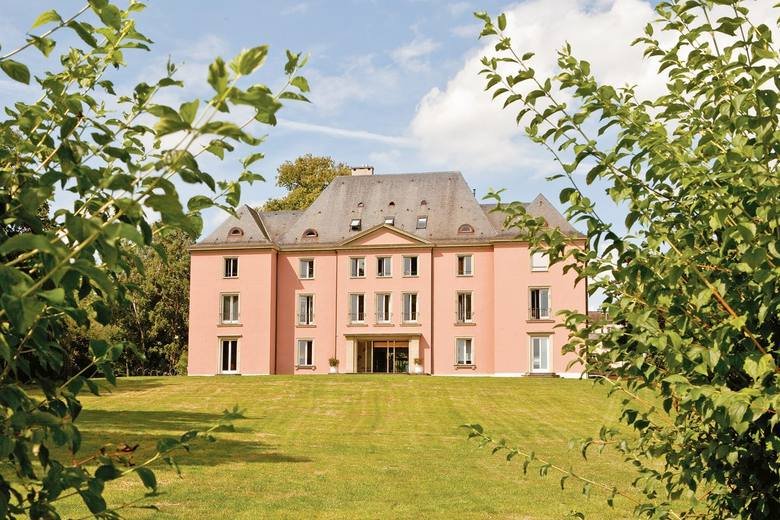
Villa Barton, Geneva
Villa Barton · photo: Geneva Graduate Institute

For three days at Villa Barton on the shore of Lake Geneva, the Global Expert Network on Copyright User Rights met to ask what copyright should allow in the age of artificial intelligence: for researchers, for libraries and archives, for creators, and for the communities whose knowledge feeds the machines.

Here is who was there and what they said. Each session below shows the speakers in their own words, with photos, short video bites, the slides and the full transcript. Open a session to see everything, or search across all of it.

About the Global Expert Network on Copyright User Rights ›

Thursday 1 October

08:00–09:00 Light breakfast

S1

09:00–09:30 · Auditorium

Opening and Introduction

Sean Flynn

S2

09:30–11:00 · AuditoriumPublic AI and Just AI

The Case for Just AI

Ben Cashdan · Arul Scaria · Luca Cominassi · Teshager Dagne · Carolina Botero · Anna Mazgal

Ben CashdanBen CashdanBen Cashdan is an economist and television producer in South Africa. He was an economic advisor in the South African Presidency under President Nelson Mandela, focusing on capacity building and local economic development. Since 2000 Ben has served as executive producer of a number of television series on democracy and development for global broadcasters. In 2015 Ben co-founded ReCreate South Africa, a coalition of creators and users of copyrighted material in South Africa, working together for fair and balanced copyright reform and access to knowledge.
And then the most important one, I think, is the money, is following the money. … we're the people at the bottom supplying the inputs and we're the people at the top requiring the outputs, but everything goes through a funnel on the way there. … And there…
Ben Cashdan▶ bite
Arul ScariaArul ScariaProfessor of Law and Co-Director of the Centre for IP Research and Advocacy at the National Law School of India University (NLSIU), Bengaluru. He is also an affiliate faculty of the CopyrightX programme of Harvard Law School. He pursued his doctoral studies at the International Max Planck Research School for Competition and Innovation (IMPRS-CI) and post-doctoral research at the Catholic University of Louvain (UCL), Belgium. He was the first academician to be appointed as an Independent Expert by the IP Division of the Delhi High Court and he was also a court appointed Amicus Curiae in ANI v. OpenAI, the first GenAI related copyright litigation in India.
India is, of course, having the largest number of voters in this world. … So someone came up with this wonderful idea that maybe we should use AI for cleaning up the voters list, with a net result that millions were thrown out of the voters list without…
Arul Scaria▶ bite
Luca CominassiLuca CominassiLuca Cominassi is an Attorney-at-Law specializing in Emerging Technologies and a Public AI Fellow at Metagov. He is the co-founder of Ultrafab, an Internet of Things (IoT) startup powered by AI. He is the co-founder of Parti Collective, a network practicing knowledge sharing and systemic thinking for a radically just and regenerative society. He holds a Master's Degree in IT Law and Legal Informatics from Alma Mater Studiorum University of Bologna (CIRSFID) and a Law Degree from the University of Parma.
I see sovereignty in terms of resilience, not autarchy. … what we are talking about is open source, and is by definition and by design multilateral, and is not about closing, but it's about opening.
Luca Cominassi▶ bite
Teshager DagneTeshager DagneAssociate Professor, Ontario Research Chair in Governing Artificial Intelligence. Member of Faculty of Graduate Studies, Masters of Public Policy, Administration and Law Program (MPPAL); Graduate Program in Law, Osgoode Hall Law; Graduate Program in Science and Technology Studies. He has previously taught at Thompson Rivers University Faculty of Law and the Schulich School of Law at Dalhousie University, where he earned his Doctoral degree and was a Schulich Research Fellow.
…when local AI developers approach these entities to have access to that, they will assert copyright, but it's not really about copyright alone. It's more about the data extraction fear. Once we let you access this, what will happen to it when you…
Teshager Dagne▶ bite
Carolina BoteroCarolina BoteroIs a Colombian lawyer with more than 20 years of experience in the defense of human rights in digital environments. She has been recognized with the EFF 2024 award for her work in Latin America. She holds two master's degrees in law (VUB and UAB) and directed the Karisma Foundation for a decade. She was part of UNESCO’s advisory committee of experts for the Open Science Recommendation. She is a contributor to media outlets such as El Espectador, La Silla Vacía and Razón Pública. She participates in international academic and consultative spaces such as the Board of Kairsma, CELE or Cetic.BR and currently advises organizations such as AlSur and PIJIP.
But right now with Trump, it's clear that Latin America is the backyard of the U.S. And therefore, we are pressed with its policies, among them innovation. So innovation is the rule for discussing AI in Latin America.
Carolina Botero▶ bite
Anna MazgalAnna MazgalAnna Mazgal is the Executive Director at Wikimedia Europe. She works on freedom of expression, access to information online as well as platform liability and has specialised in digital rights and advocacy. She previously worked as Senior EU Policy Advisor at Wikimedia Germany and the Centrum Cyfrowe as Director for Strategy and Development.
There is also an emerging issue of residential proxies, which is basically scraping that happens through private people's devices, and it's undetectable as massive scraping but has the same effect, right? … And there were cases, not for Wikimedia,…
Anna Mazgal▶ bite
All 10 photos ›
And then the most important one, I think, is the money, is following the money. … we're the people at the bottom supplying the inputs and we're the people at the top requiring the outputs, but everything goes through a funnel on the way there. … And there are all those challenges: bias, access, livelihoods, control, money and concentration.Ben Cashdan

From the transcript“AI can create stuff and it can replace the need for access to the stuff that flesh and blood intelligent beings are creating. And eventually, when this cycle goes through a few times, you might find that it just trains itself on its own outputs, on previous outputs of AI.” — Ben Cashdan

11:00–11:30 Refreshments available

S3

11:30–13:00 · AuditoriumThe Right to Research

Minimum L&Es to Enable Just AI

Sean Flynn · Martin Senftleben · Rachael Samberg · Thomas Margoni · Maja Bogataj Jančič · Carys Craig

Sean FlynnSean FlynnProfessor Flynn researches and teaches on the intersection of intellectual property, international law, and human rights. Professor Flynn designs and manages a wide variety of research and advocacy projects that promote the public interest in intellectual property and information law. Professor Flynn Chairs the Global Expert Network on Copyright User Rights and is a founding member of the Global Congress on Intellectual Property and the Public Interest. He is Editor in Chief of Infojustice.org, a leading public interest law and policy blog. He is a special faculty appointment at American University Washington College of Law, visiting Scholar at the University of Amsterdam’s Institute…
…what kind of an exceptions environment do we think is appropriate in this current moment? If we were going to take one step forward, would it be the same step that we would have taken 10 years ago…
Sean Flynn▶ bite
Martin SenftlebenMartin SenftlebenMartin Senftleben is Professor of Intellectual Property Law and Director of the Institute for Information Law (IViR) at the Amsterdam Law School. His work focuses on reconciling private intellectual property rights with competing social, cultural and economic public interests. Current research topics include institutionalised algorithmic copyright enforcement in the EU, the interplay between robot creativity and human literary and artistic production, the preservation of the public domain of cultural expressions, and the impact of targeted advertising on market economies. He is a member of the Copyright Advisory Committee of the Dutch State and has advised WIPO on trademark and…
So in a nutshell, the fear is that AI systems only speak US American and Chinese and don't speak all languages that we have in the EU. And, well, that's something, I guess, that is also a major concern to many other countries who are not … the, the…
Martin Senftleben▶ bite
Rachael SambergRachael SambergRachael Samberg is the founder and director of the Scholarly Communication & Information Policy office at UC Berkeley. She develops and oversees the strategic direction of a robust academic program that helps scholars navigate the shifting publishing, intellectual property, and information policy landscapes in ways that promote research dissemination, accessibility, and impact.
Every negotiation starts from scratch, and publishers expressly tell us that when the University of California is not at the table, other institutions simply accept whatever terms are offered. … They can't push back, because they lack legal expertise, the…
Rachael Samberg▶ bite
Thomas MargoniThomas MargoniProf. Dr. Thomas Margoni is Research Professor of Intellectual Property Law at the Faculty of Law and Criminology, KU Leuven, a member of the Board of Directors of the Centre for IT and IP Law (CiTiP) and director of its IP and IT Law programme. His research concentrates on the relationship between law and technology, with a focus on comparative and European copyright law. He works as an expert and author of commissioned studies for EU and international institutions, including the European Commission, the EU AI Office, the European Parliament, the CJEU, the OECD, WIPO, the EUIPO, the Japanese Patent Office and the Korean Copyright Commission. He sits on the editorial boards of JIPITEC,…
…the uses that we can do of AI are also socially positive and desirable. … there are also situations where they can be extremely advantageous for the advancement of, of knowledge, and therefore the question becomes much more a redistributive question…
Thomas Margoni▶ bite
Maja Bogataj JančičMaja Bogataj JančičDr Maja Bogataj Jančič is the founder and head of the Intellectual Property Institute (IPI) in Ljubljana, Slovenia, a research, training and consulting institution with permanent observer status at WIPO, and founder and head of the Open Data and Intellectual Property Institute (ODIPI). A copyright expert, her recent work focuses on open science, open data, data governance and artificial intelligence, and on the legal framework of copyright and data for research. She is the National Coordinator for Slovenia and Regional Coordinator for the six Western Balkan countries of the Knowledge Rights 21 project. Maja graduated from the Faculty of Law in Ljubljana and holds master’s degrees from…
So Slovenian implementation is a strong case for public interest AI. … We are aware that our small language, we are two million living in Slovenia, hopefully more speak this language, that our language will not survive if AI will not be built also on our…
Maja Bogataj Jančič▶ bite
Carys CraigCarys CraigCarys Craig is a Professor of Law at Osgoode Hall Law School, York University, in Toronto, Canada. She is the Academic Director of the Osgoode Professional Development LLM Program in Intellectual Property Law, Director of IP Osgoode (Osgoode’s Intellectual Property Law & Technology Program), and recently served as Osgoode’s Associate Dean (Research & Institutional Relations).
…if we don’t frame it as that, as a positive, enforceable, actionable right to do the research, then with each obstacle we take down, another one pops up.
Carys Craig
All 13 photos ›
what kind of an exceptions environment do we think is appropriate in this current moment? If we were going to take one step forward, would it be the same step that we would have taken 10 years ago,Sean Flynn

From the transcript“So Recital 14 of the CDSM, which is connected to Article 3, so text and data mining for scientific purposes, speaks of open access. So lawful access should include open access policies, contracts, other lawful means, lawful full stop. Lawful access should also include material freely available online.” — Thomas Margoni

13:00–14:00 Lunch

S4

14:00–15:30 · AuditoriumRemuneration & Licensing

Sustaining creativity via Remuneration & Licensing

Luca Schirru · Séverine Dusollier · Elena Izyumenko · Alice de Perdigão Lana · Chuck Roslof · Paul Keller

Luca SchirruLuca SchirruResearch Director at the Geneva Centre on Knowledge Governance (CKG), Governance and Regulation Specialist at the SAVITS Project (IBICT), and Research Fellow at the Centre for IT & IP Law (CiTiP – KU Leuven). Academic Coordinator of the Global Expert Network on Copyright User Rights. Lawyer and legal consultant in Intellectual Property. Teaches at several Brazilian universities, including the Pontifical Catholic Universities of Minas Gerais, Paraná and Rio de Janeiro, and CEPED/UERJ. Held postdoctoral positions at the National Institute of Citizen Science (INCC/IBICT, 2024-2026) and at CiTiP – KU Leuven (2022–2024).
The idea is to get everyone to keep creation flowing, to keep people interested in creating. So if you know that you can be an artist and you can be a musician and you can create and you can still pay your bills, this is a huge incentive for creation.
Luca Schirru▶ bite
Séverine DusollierSéverine DusollierSéverine Dusollier is Professor of Intellectual Property at Sciences Po (Paris), holds a Senior Chair at the Institut Universitaire de France, and heads the Master in Innovation Law. She is a qualified member of the CSPLA (French Copyright Council), a founding member of the European Copyright Society and a member of ATRIP. From 2014 to 2019 she held an ERC research grant on commons and inclusivity in property. Her research interests include copyright in digital environment and in AI (unsurprisingly), the concept of authorship, contractual protection of authors and performers, exceptions and limitations, commons and property, and the public domain. From 2006 to 2014 she was Professor at…
This is where the public domain has a key role to play: it is a commons for all, and it enriches the copyright regulation and this political place where we can get access to works, culture. … maybe the creativity should be protected and remunerated not…
Séverine Dusollier▶ bite
Elena IzyumenkoElena IzyumenkoAssistant Professor of Intellectual Property (IP) Law at the University of Amsterdam's Institute for Information Law (IViR). Research explores how copyright and trademark laws in Europe (and beyond) intersect with the public interest and with human and fundamental rights. Current topics include copyright and AI regulation, creator remuneration from streaming, copyright metadata and cultural diversity, environmental sustainability in IP protection, fashion and IP, gender biases in IP law, and filter bubbles created by online behavioural advertising. Previously worked as a case-processing lawyer at the European Court of Human Rights (Council of Europe) and as a researcher in IP law at the…
So I guess what I'm trying to argue is that if we invoke human rights to justify AI remuneration, we really have to be consistent and follow that argument through, and ask who actually gets paid and whether the creators really benefit.
Elena Izyumenko▶ bite
Alice de Perdigão LanaAlice de Perdigão LanaPh.D. candidate in Public Policy at the Federal University of Rio de Janeiro (UFRJ), Brazil, with a research stay at the University of St. Gallen (HSG), Switzerland. Holds a master’s and bachelor’s degree in Law from the Federal University of Paraná (UFPR). Member of the coordination team at Creative Commons Brazil. Researcher at the Brazilian Institute of Copyright (IBDAutoral) and at the Study Group on Copyright and Industrial Property Rights (GEDAI/UFPR). Deputy Secretary of the Copyright Law Observatory Institute (IODA). Youth Ambassador for the Internet Society (ISOC). Attorney at De Paula Kraft. Legal consultant.
We have beautiful solutions on paper that might not work in most countries. … It's not sustaining creativity in Europe. If that was the case, I probably wouldn't be here. So we have to think of models that work in countries with weaker institutions.
Alice de Perdigão Lana▶ bite
Chuck RoslofChuck RoslofOversees the Wikimedia trademark portfolio, including trademark registration, enforcement, and licensing. Works with the General Counsel/Secretary to support the Wikimedia Foundation Board of Trustees and provides legal advice and support to Wikimedia Foundation staff working on grantmaking, fundraising, and the Wikimedia affiliate system. Serves as Secretary of the Wikimedia Endowment and occasionally works on copyright, licensing, and public policy issues.
I was trying to think about these ideas from the perspective of creators who are specifically creating to contribute to a knowledge commons. So I work for the Wikimedia Foundation, so that's … Wikipedia editors, that's people who are contributing to open…
Chuck Roslof▶ bite
Paul KellerPaul KellerPaul Keller is Director of Policy at Open Future, with more than 20 years of experience as a media activist, open policy advocate and systems architect working to improve access to knowledge and culture. A political scientist by training, he is a research fellow at the Institute for Information Law of the University of Amsterdam, a board member of Public Spaces, and sits on the advisory boards of the Glushko and Samuelson Information Law and Policy Lab and the Europeana Foundation. He was a founding member of the COMMUNIA association for the Public Domain in 2009 and remains its President, founded Creative Commons Netherlands in 2005 and led it until 2018, and from 2009 to 2015 was one…
This is not a selective process; people have not taken, "I'll take this and I'll take that and I don't take that." They have taken everything that was up for grabs, and that is what made this technology different. … So trying to solve this with copyright…
Paul Keller▶ bite
All 14 photos ›
So I guess what I'm trying to argue is that if we invoke human rights to justify AI remuneration, we really have to be consistent and follow that argument through, and ask who actually gets paid and whether the creators really benefit.Elena Izyumenko

From the transcript“So practically, if the creators' works were already used for training an AI model and to generate economic value, then to take this economic value, which could have remunerated those creators, and to redirect it to finance creativity more generally, starts to look, at least functionally, like a deprivation of those creators' material interests.” — Elena Izyumenko

15:30–16:00 Refreshments available

S5

16:00–17:30 · AuditoriumWIPO Negotiations on L&Es

Multilateral System, Right to Research and JustAI

Susan Isiko Štrba · Henning Grosse Ruse-Khan · Michael Geist · Neha Mishra · Stephen Wyber · Viviana Muñoz

Susan Isiko ŠtrbaSusan Isiko ŠtrbaDr. Susan Isiko Štrba is currently Counsel and Senior Research Fellow at the Centre on Knowledge Governance at the Graduate Institute. She provides legal and technical assistance to African Member States for negotiations, especially relating to intellectual property. She also provides tailored research on knowledge governance, with special focus on Africa. She combines teaching and research with providing policy and legislative advice and technical training to governments, intergovernmental organisations and civil society.
We all agree, maybe, that copyright or intellectual property is a private right. … is there a responsibility for governments to regulate those private rights?
Susan Isiko Štrba▶ bite
Henning Grosse Ruse-KhanHenning Grosse Ruse-KhanHenning Grosse Ruse-Khan is Professor of Law at the University of Cambridge, Co-Director of the Centre for Intellectual Property and Information Law (CIPIL), a Fellow of the Lauterpacht Centre for International Law, and Director of Studies and Fellow at King’s College. His research, teaching and expert advice focus on international and European intellectual property protection and development, world trade and investment law, and the interfaces between legal regimes and private orders in international law. He has extensive experience as a legal expert for WIPO and other international organisations, tailoring IP law and policy to domestic economic, social and technological conditions, and…
So the broader question is: is there, within more long-standing principles of how states behave to one another, an argument that you must not allow your territory to be used for harming others? And I think that's a fairly solid principle, right?
Henning Grosse Ruse-Khan▶ bite
Michael GeistMichael GeistDr Michael Geist is a law professor at the University of Ottawa, where he holds the Canada Research Chair in Internet and E-commerce Law and is a member of the Centre for Law, Technology and Society. He holds an LL.B. from Osgoode Hall Law School, LL.M. degrees from Cambridge University and Columbia Law School, and a J.S.D. from Columbia Law School. He serves on many boards, including Internet Archive Canada and the EFF Advisory Board. He was appointed to the Order of Ontario in 2018 and his awards include the Canadian Journalists for Freedom of Expression Vox Libera Award, the Kroeger Award for Policy Leadership, the Public Knowledge IP3 Award, the Ontario Library Association’s Les…
We get that in Canada too, largely from Canadian companies that want government handouts to create data centres and argue that what they're going to do is create AI sovereignty. Respectfully, most of this is nonsense. … There is no such thing as AI…
Michael Geist▶ bite
Neha MishraNeha MishraNeha Mishra is Assistant Professor in the International Law Department of the Geneva Graduate Institute. Her research sits at the intersection of international economic law and digital governance, with a focus on digital trade, global data governance and the regulation of emerging technologies, including the governance of artificial intelligence and digital markets, cybersecurity, regulatory interoperability, and the implications of digital transformation for developing economies. She serves on the editorial boards of the Leiden Journal of International Law, the Journal of International Economic Law and the Journal of World Investment and Trade, is Co-Chair of the American Society of…
And these burdens are definitely not evenly distributed. … Because large firms, the large tech companies, can absorb the cost. They can reorganise their infrastructure. They can restructure their contracts to align with the ecosystem. … But most smaller…
Neha Mishra▶ bite
Stephen WyberStephen WyberStephen Wyber is Director, External Affairs at the International Federation of Library Associations and Institutions. In this role, he works with a team to raise awareness of the potential of libraries to engage in and contribute to key global agendas, serving as essential partners for sustainable development. Stephen focuses in particular on questions around copyright and open science, both in the context of IFLA’s engagement at the World Intellectual Property Organization, and its administration of the Knowledge Rights 21 Programme, which advocates for information laws and policies that enable research, education and access to culture. His other specific areas of work include the UN’s…
But it may also be the case that maybe there's the risk that the creative industries have cried wolf one time too often: like, Betamax was going to destroy them, and then the internet was going to destroy them, and then Netflix was going to destroy them.…
Stephen Wyber▶ bite
Viviana MuñozViviana MuñozCoordinator, Health, Intellectual Property and Biodiversity Programme (HIPB), South Centre. Dr. Muñoz-Tellez is a muti-disciplinary policy expert in the area of public health and intellectual property and innovation. She holds a Masters in Development Management from the London School of Economics and a PhD in management of technology from EPFL, Lausanne.
We can't start a conversation of just AI and forget about why do we not have just digitalization. … Is it for everyone really AI access the question? Is it really what everyone needs? … Does everyone need frontier AI models? No.
Viviana Muñoz▶ bite
All 15 photos ›
We all agree, maybe, that copyright or intellectual property is a private right. … is there a responsibility for governments to regulate those private rights?Susan Isiko ŠTrba

From the transcript“This is from a New York Times article: collective action, or a reinforcement problem here, where you have OpenAI being founded because people thought Google was going too quickly, and Anthropic was founded because they were thinking that OpenAI was going too quickly, and xAI was founded because, you know, Musk thought, "Oh, this was way too slow."” — Henning Grosse Ruse-Khan

17:30–20:00 Reception

Friday 2 October

08:30–10:00 Light breakfast snacks

S7

09:00–10:45 · Room B11The Right to Research

Right to Science

Margaret Chon · Andreas Reis · Argyri Panezi · Guillermo Rodrigo Corredor · Kacper Szkalej · Klaus Beiter · Heather Joseph · Yuanqiong Hu

Margaret ChonMargaret ChonMargaret Chon is the Faculty Director of the Technology, Innovation Law, and Ethics (TILE) Institute and the Donald and Lynda Horowitz Endowed Chair for the Pursuit of Justice at Seattle University School of Law, where she teaches intellectual property. Her work focuses on the role of global intellectual property systems in promoting human flourishing and sustainable development. A graduate of the University of Michigan (M.H.S.A. and J.D.) and Cornell University (A.B.), she is an elected member of the American Law Institute and the American Bar Foundation. She clerked for Judges A. Leon Higginbotham and Dolores J. Sloviter of the U.S. Court of Appeals for the Third Circuit and practised…
The right to science and the right to research are two sides of the same coin.
Margaret Chonreporting back
Margaret ChonMargaret ChonMargaret Chon is the Faculty Director of the Technology, Innovation Law, and Ethics (TILE) Institute and the Donald and Lynda Horowitz Endowed Chair for the Pursuit of Justice at Seattle University School of Law, where she teaches intellectual property. Her work focuses on the role of global intellectual property systems in promoting human flourishing and sustainable development. A graduate of the University of Michigan (M.H.S.A. and J.D.) and Cornell University (A.B.), she is an elected member of the American Law Institute and the American Bar Foundation. She clerked for Judges A. Leon Higginbotham and Dolores J. Sloviter of the U.S. Court of Appeals for the Third Circuit and practised…
The author is one who causes to grow, the creator, the originator, not one who destroys.
Margaret Chonreporting back
Margaret ChonMargaret ChonMargaret Chon is the Faculty Director of the Technology, Innovation Law, and Ethics (TILE) Institute and the Donald and Lynda Horowitz Endowed Chair for the Pursuit of Justice at Seattle University School of Law, where she teaches intellectual property. Her work focuses on the role of global intellectual property systems in promoting human flourishing and sustainable development. A graduate of the University of Michigan (M.H.S.A. and J.D.) and Cornell University (A.B.), she is an elected member of the American Law Institute and the American Bar Foundation. She clerked for Judges A. Leon Higginbotham and Dolores J. Sloviter of the U.S. Court of Appeals for the Third Circuit and practised…
Some US legal scholars have argued that a market-based, or at least a non-government-controlled, system of publishing, open publishing, open science, open access, in part facilitated by copyright or open license models, which depend on copyright, can be a…
Margaret Chonreporting back
it frames the right to science as both instrumental, which supports the right to health and food, and participatory. And I think this is really significant: doing science, not just receiving its benefits, such that the right to science and the right to research are two sides of the same coin.Maggie ChonYouTube ↗
S6

09:00–10:45 · Room B12Traditional Knowledge & AI

Traditional Knowledge: Legal Rights and Ethical Responsibilities

Wend Wendland · Kim Nayyer · Vitor Ido · Paula Westenberger · Teshager Dagne · Nancy Weiss

Wend WendlandWend WendlandWend Wendland has more than 40 years’ experience in intellectual property, in both the private and public sectors. He was a Director of the World Intellectual Property Organization (WIPO) for many years until his retirement in June 2025. He was the Secretary of the WIPO Intergovernmental Committee on Intellectual Property, Genetic Resources and Folklore (the IGC). He is the author of 'The Journey to the WIPO Treaty on Genetic Resources and Associated Traditional Knowledge: Policy, Process and People' (Edward Elgar, 2025). Mr. Wendland is a Senior Fellow of the Geneva Centre on Knowledge Governance at the Graduate Institute in Geneva and an Adjunct Professor, Faculty of Law, University…
In fact, I would argue that the challenges posed by AI are amplified and made more vivid when one speaks about TK. TK is therefore an edge case. It's a hard case on which there's much to be said that is relevant to designing a governance framework for just AI.
Wend Wendland▶ bite
Kim NayyerKim NayyerKim Nayyer is Associate Dean and Edward Cornell Law Librarian at Cornell Law School, where she oversees the Law Library and its services, and a Professor of the Practice with extensive experience teaching legal writing and legal research. She teaches a seminar in comparative copyright, leads a colloquium on the critical evaluation of legal information, teaches legal research for the MSLS degree, and supervises reading, writing and experiential learning courses for JD and LLM students. Her research interests include critical information literacy in machine-manipulated environments; disinformation, digital citizenship and data ownership; the ethics of big data and artificial intelligence;…
So I see it less as a copyright problem and more of a larger-scale problem of exploitation, extraction, taking of knowledge and power. … But looking at more individual-level remuneration per work, I think, is an insufficient approach when we really…
Kim Nayyer▶ bite
Vitor IdoVitor IdoAssistant Professor at the Department of Commercial Law, University of São Paulo Faculty of Law, since 2024. He holds a PhD (2021), an LL.M. (2017) and an LL.B. (2014) from the same institution, as well as a BA in Social Sciences from FFLCH/USP (2017). He is part of the coordination team of the Triangular International Partnership Programme in Higher Education (PITES), run jointly with Université Jean Moulin Lyon 3, Université Lumière Lyon 2 and Université Jean Monnet Saint-Étienne.
The main thing, and I'll be very blunt about it, is that oftentimes open access conditions that come with big funders basically violate previously agreed consent negotiations. … You see also big funders that come and say, oh, we must just put everything…
Vitor Ido▶ bite
Paula WestenbergerPaula WestenbergerDr Paula Westenberger is a Senior Lecturer in Intellectual Property Law and a member of the Centre for Artificial Intelligence at Brunel University of London. She holds a PhD and an LLM in Intellectual Property Law from Queen Mary University of London, an LLB from PUC-Rio and a PG Certificate in Curating and Collections Management from Birkbeck. She is a Bridging Responsible AI Divides (BRAID) Research Fellow leading the AHRC-funded project Responsible AI for Heritage: copyright and human rights perspectives, in partnership with RBG Kew, and founded and leads the Heritage AI and Law (HAIL) Network. She is a member of the Museums Association Expert Working Group on AI and Ethics, Editor…
…if copyright governs a researcher's corpora of data for a research project, the copyright is biasing the research, yes. The corpora, the data that is used for research, has to be governed by the research question, not the copyright status of the materials.
Paula Westenberger▶ bite
Teshager DagneTeshager DagneAssociate Professor, Ontario Research Chair in Governing Artificial Intelligence. Member of Faculty of Graduate Studies, Masters of Public Policy, Administration and Law Program (MPPAL); Graduate Program in Law, Osgoode Hall Law; Graduate Program in Science and Technology Studies. He has previously taught at Thompson Rivers University Faculty of Law and the Schulich School of Law at Dalhousie University, where he earned his Doctoral degree and was a Schulich Research Fellow.
And the harms are significant. … The market replacement of the authentic art with this unauthenticated reproduction devalues the community-made artwork. But beyond that, the inaccurate representation, the misinformation, as well as the reinforcement of…
Teshager Dagne▶ bite
Nancy WeissNancy WeissNancy E. Weiss is a Senior Policy Fellow in the Program on Information Justice and Intellectual Property at American University’s Washington College of Law and an Adjunct Professor and Supervisor in WCL’s Glushko-Samuelson Intellectual Property Law Clinic. She has held senior roles in the public and private sectors in information policy, cultural expression and engagement, and federal legal practice, including as the first General Counsel of the Institute of Museum and Library Services, Senior Advisor for IP and Innovation at the White House, and counsel to the U.S. Arts and Artifacts Indemnity Program. Most recently she was the Fifth Kaminstein Scholar in Residence at the United States…
By voice I mean how do you have Indigenous peoples define and describe their own knowledge rather than simply have another speak for them, so having that authenticity. Agency is the ability to participate meaningful in decisions about how knowledge is…
Nancy Weiss▶ bite
All 14 photos ›
So I see it less as a copyright problem and more of a larger-scale problem of exploitation, extraction, taking of knowledge and power. … But looking at more individual-level remuneration per work, I think, is an insufficient approach when we really consider that this is really another form of colonialism, colonization of knowledge in this case, rather than land or resources or human labor.Kim Nayyer

From the transcript“So, in past years, before the models came about and did their work, before the large corporations came about, ignored licenses, ignored copyright protections, we used to engage in... we would share knowledge by agreement, by permissions, by licenses, and now we are in an environment where that is almost irrelevant.” — Kim Nayyer

09:00–11:00 S8 Towards Common Principles for Data Re-use Conditions (closed meeting)

10:30–11:30 Refreshments available

S10

11:15–12:45 · Room B11Public AI and Just AI

Just AI in the Global South

Tobias Schonwetter · Arul Scaria · Hanani Hlomani · Pierre El Khoury · Susan Isiko Štrba · Allan Rocha de Souza · Carolina Botero · Patricia Diaz · Teshager Dagne

Tobias SchonwetterTobias SchonwetterDr Tobias Schonwetter is an Associate Professor at the University of Cape Town where he directs the IP Unit and the iNtaka Centre for Law & Technology. He specialises in and teaches intellectual property and cyberlaw, particularly the relationship between intellectual property, innovation and development. Tobias is an Associate Member of the Centre of Law, Technology and Society at the University of Ottawa. He regularly advises government entities in South Africa and is part of ASSAf’s POPIA compliance framework committee as well as NACI’s AI Strategy team (Trust and Regulation). Tobias has co-led numerous research projects in the area of IP and IT law, including the Open AIR project.…
The problem that we are facing is not so much that we lack ideas, we have lots of them, but that we need better coordination, and that we are currently working in too many silos.
Tobias Schonwetterreporting back
Tobias SchonwetterTobias SchonwetterDr Tobias Schonwetter is an Associate Professor at the University of Cape Town where he directs the IP Unit and the iNtaka Centre for Law & Technology. He specialises in and teaches intellectual property and cyberlaw, particularly the relationship between intellectual property, innovation and development. Tobias is an Associate Member of the Centre of Law, Technology and Society at the University of Ottawa. He regularly advises government entities in South Africa and is part of ASSAf’s POPIA compliance framework committee as well as NACI’s AI Strategy team (Trust and Regulation). Tobias has co-led numerous research projects in the area of IP and IT law, including the Open AIR project.…
Digital sovereignty; data governance and infrastructure; public AI and global market concentration; fundamental rights; copyright, text and data mining and AI training; and then lastly, and overlapping with what we just heard about, traditional…
Tobias Schonwetterreporting back
I have to say that there was one tongue-in-cheek comment from one of the delegates that we should perhaps partner more with Europe in this space, because they now too find themselves, for the very first time, in the situation of being the colonized in this space.Tobias SchonwetterYouTube ↗
S9

11:15–12:45 · Room B12Creator Rights & AI Creations

Copyright and AI Outputs

Zachary Cooper · Clark Asay · Carys Craig · Séverine Dusollier · Thomas Margoni

Zachary CooperZachary CooperZachary Cooper is a legal scholar & lecturer, whose current research programme explores the techno-regulatory incoherence of applying copyright to emerging forms of Generative AI-enabled media, with an eye to developing new frameworks for creative ownership for the 21st Century. His interdisciplinary research programme has led to dozens of speaking invitations worldwide in a wide array of settings, including the International Conference of Machine Learning in Vienna, the IP Scholars Conference in Berkeley, the Global Copyright Expert Network in Geneva, the UNESCO AI & Human Rights Conference in Ljubljana, re:publica in Berlin, and at the Summit for the ICC Arrest Warrants Against…
So then at a certain point, all that matters is who once upon a time in the 20th century owned everything, and now they just get a cut of everything that everyone makes in the 21st century. That to me is a kind of disaster.
Zachary Cooper▶ bite
Clark AsayClark AsayProfessor Clark Asay joined the BYU Law faculty in June 2014. Before coming to BYU, Professor Asay was a Visiting Assistant Professor and Shughart Scholar at Penn State’s Dickinson School of Law from 2012-2014. Prior to entering legal academia, Professor Asay worked at Amazon’s Lab126 and supported the Kindle, Kindle Fire, and Amazon Fire teams. Professor Asay also worked at the law firm of Wilson Sonsini Goodrich & Rosati, where he practiced in the field of technology transactions and intellectual property licensing. Professor Asay is a graduate of Stanford Law School, where he was an Executive Editor for the Stanford Law Review. Professor Asay also earned an M.Phil from the University…
Ultimately, I am a human creativity optimist. I just think that whatever AI, and to some of the points, whatever AI does is never going to be able to replace sort of the human creative spirit. That sounds a little corny, but that's really how I feel.
Clark Asay▶ bite
Carys CraigCarys CraigCarys Craig is a Professor of Law at Osgoode Hall Law School, York University, in Toronto, Canada. She is the Academic Director of the Osgoode Professional Development LLM Program in Intellectual Property Law, Director of IP Osgoode (Osgoode’s Intellectual Property Law & Technology Program), and recently served as Osgoode’s Associate Dean (Research & Institutional Relations).
So I'm saying that's what we should do, or might at least consider doing, in this context: saying, yeah, you used AI, that was a choice; yes, you're still an author, but we have decided our copyright system is not here to incentivize or reward the use of…
Carys Craig▶ bite
Séverine DusollierSéverine DusollierSéverine Dusollier is Professor of Intellectual Property at Sciences Po (Paris), holds a Senior Chair at the Institut Universitaire de France, and heads the Master in Innovation Law. She is a qualified member of the CSPLA (French Copyright Council), a founding member of the European Copyright Society and a member of ATRIP. From 2014 to 2019 she held an ERC research grant on commons and inclusivity in property. Her research interests include copyright in digital environment and in AI (unsurprisingly), the concept of authorship, contractual protection of authors and performers, exceptions and limitations, commons and property, and the public domain. From 2006 to 2014 she was Professor at…
So this is, again, something about users' rights, you know, how to make users' rights not just a means of defence, but, you know, a positive action or claim from users, saying, "I have the right to do that, so please remove your technological constraint…
Séverine Dusollier▶ bite
Thomas MargoniThomas MargoniProf. Dr. Thomas Margoni is Research Professor of Intellectual Property Law at the Faculty of Law and Criminology, KU Leuven, a member of the Board of Directors of the Centre for IT and IP Law (CiTiP) and director of its IP and IT Law programme. His research concentrates on the relationship between law and technology, with a focus on comparative and European copyright law. He works as an expert and author of commissioned studies for EU and international institutions, including the European Commission, the EU AI Office, the European Parliament, the CJEU, the OECD, WIPO, the EUIPO, the Japanese Patent Office and the Korean Copyright Commission. He sits on the editorial boards of JIPITEC,…
At this point, maybe copyright is obsolete for a world of AI, but it doesn't mean we don't need a form of legal protection that allows authors to remain authors, if expression is what makes us human authors.
Thomas Margoni▶ bite
All 13 photos ›
So then at a certain point, all that matters is who once upon a time in the 20th century owned everything, and now they just get a cut of everything that everyone makes in the 21st century. That to me is a kind of disaster.Zachary Cooper

From the transcript“Yeah, pretty much everyone kind of thinks, well, they could be secondarily liable due to having actual or constructive knowledge about infringement of the right of reproduction, or even primarily liable under the DSM for communicating, making available infringing content to the public. I'm not so sure, because I don't know that you could have actual or constructive knowledge that something's copyright infringing, because it's a qualitative, it's a socially…” — Zachary Cooper

S11

11:30–13:00 · Room B13The Right to Research

Globalising Fair Use & Library Rights

Jonathan Band · Naama Daniel · Stephen Wyber · Torger Kielland · Henning Grosse Ruse-Khan · Rachael Samberg

Jonathan BandJonathan BandJonathan Band is an attorney in Washington DC specializing in intellectual property policy. He served as an adjunct professor at the Georgetown University Law Center for over 20 years, and currently is a senior policy fellow with the Program on Information Justice and Intellectual Property at the American University Washington College of Law.
Putting all these things together, we could really see a lot of public AIs evolving on a national basis or on a regional basis.
Jonathan Bandreporting back
Jonathan BandJonathan BandJonathan Band is an attorney in Washington DC specializing in intellectual property policy. He served as an adjunct professor at the Georgetown University Law Center for over 20 years, and currently is a senior policy fellow with the Program on Information Justice and Intellectual Property at the American University Washington College of Law.
Because libraries around the world, the national libraries, not the research libraries or the public libraries, these are typically the national libraries, are getting these deposits.
Jonathan Bandreporting back
Jonathan BandJonathan BandJonathan Band is an attorney in Washington DC specializing in intellectual property policy. He served as an adjunct professor at the Georgetown University Law Center for over 20 years, and currently is a senior policy fellow with the Program on Information Justice and Intellectual Property at the American University Washington College of Law.
And so it occurred to me that, and one of the beauties of sort of focusing on national libraries and their role, their potential role in developing public AI, is this is, again, as I said, outside of the copyright space.
Jonathan Bandreporting back
Jonathan BandJonathan BandJonathan Band is an attorney in Washington DC specializing in intellectual property policy. He served as an adjunct professor at the Georgetown University Law Center for over 20 years, and currently is a senior policy fellow with the Program on Information Justice and Intellectual Property at the American University Washington College of Law.
And just to explain what that is: in most countries, or in many countries, there is a requirement on typically publishers and other creators of copyrighted works to deposit their publications with the national library.
Jonathan Bandreporting back

12:00–15:00 Lunch available

S13

13:15–14:45 · Room B11WIPO Negotiations on L&Es

African Group Proposal on L&Es

Sean Flynn · Cosmas Babilas Masimo · Juteau Tousse · Tobias Schonwetter · Carys Craig · Henning Grosse Ruse-Khan · Martin Senftleben · Susan Isiko Štrba · Teresa Nobre

Sean FlynnSean FlynnProfessor Flynn researches and teaches on the intersection of intellectual property, international law, and human rights. Professor Flynn designs and manages a wide variety of research and advocacy projects that promote the public interest in intellectual property and information law. Professor Flynn Chairs the Global Expert Network on Copyright User Rights and is a founding member of the Global Congress on Intellectual Property and the Public Interest. He is Editor in Chief of Infojustice.org, a leading public interest law and policy blog. He is a special faculty appointment at American University Washington College of Law, visiting Scholar at the University of Amsterdam’s Institute…
The topic of AI makes certain countries and certain stakeholders very nervous about research limitations and exceptions.
Sean Flynnreporting back
Sean FlynnSean FlynnProfessor Flynn researches and teaches on the intersection of intellectual property, international law, and human rights. Professor Flynn designs and manages a wide variety of research and advocacy projects that promote the public interest in intellectual property and information law. Professor Flynn Chairs the Global Expert Network on Copyright User Rights and is a founding member of the Global Congress on Intellectual Property and the Public Interest. He is Editor in Chief of Infojustice.org, a leading public interest law and policy blog. He is a special faculty appointment at American University Washington College of Law, visiting Scholar at the University of Amsterdam’s Institute…
There is a proposal moving through the SCCR to reunite discussions on the limitations and exceptions agenda…
Sean Flynnreporting back
Sean FlynnSean FlynnProfessor Flynn researches and teaches on the intersection of intellectual property, international law, and human rights. Professor Flynn designs and manages a wide variety of research and advocacy projects that promote the public interest in intellectual property and information law. Professor Flynn Chairs the Global Expert Network on Copyright User Rights and is a founding member of the Global Congress on Intellectual Property and the Public Interest. He is Editor in Chief of Infojustice.org, a leading public interest law and policy blog. He is a special faculty appointment at American University Washington College of Law, visiting Scholar at the University of Amsterdam’s Institute…
I mean, one is that at the last meeting, the research institutions part fell out of the agenda. So they're now focusing on the libraries, or the preservation interests of libraries, archives, and museums, and the rights of people with other disabilities…
Sean Flynnreporting back
All 12 photos ›
at the last meeting, the research institutions part fell out of the agenda. … There's disputes within different countries about whether they want the globalization of research exceptions. … The topic of AI makes certain countries and certain stakeholders very nervous about research limitations and exceptions.Sean FlynnYouTube ↗
S12

13:15–14:45 · Room B12The Right to Research

Defending the Commons & Open Access

Anna Mazgal · Aman Gebru · Apoorv Pragya · Delia Browne · Meredith Jacob · Sara Benson · Viviana Muñoz

Aman GebruAman GebruProfessor Aman Gebru is the George Butler Research Professor at the University of Houston Law Center. He examines issues at the intersection of intellectual property, innovation, branding, and creative expression, including frameworks for communal authorship, cultural appropriation, and trademark truthfulness. His works appear (or are forthcoming) in the Arizona State Law Journal, the American University Law Review, the University of Richmond Law Review, the Denver Law Review, the Cardozo Arts and Entertainment Law Journal, and the North Carolina Journal of Law and Technology, among others.
AI is predictive technology, and the more good-quality input it gets, the better the output would be, right? And so, we've given collectively our creativity, but now we've been asked to pay subscription, maybe even pay by sort of giving up our livelihood…
Aman Gebru▶ bite
Apoorv PragyaApoorv PragyaAssistant Professor at Chanakya National Law University, Patna. She is pursuing her Ph.D. from NALSAR University of Law. In the Doctoral Student’s Presentation at the 41st ATRIP Congress, she was awarded the second prize for the best and most succinct presentation. She has also won the Best Paper Award at the Master’s Conference on Intellectual Property (IP and Digital Technologies: Law, Policy and Society), organized by the Rajiv Gandhi School of Intellectual Property Law, IIT Kharagpur in March, 2022. Her academic interest lies in Intellectual property laws, Competition law, Aviation law and Public International Law. Her research interests include, democratization of knowledge, open…
The problem is not openness itself, but the problem is the type of openness that we have institutionalized…
Apoorv Pragya
Delia BrowneDelia BrowneDelia Browne is a copyright lawyer and policy advocate who leads the National Copyright Unit (NCU), providing specialist copyright advice to Australian schools and TAFE institutes with a focus on the digital teaching environment. A long-time member of the Creative Commons Global Network, she is the Education Sector Lead of Creative Commons Australia, has attended every CC Global Summit since 2007, and helped author CC’s Global Network Strategy. She has represented Creative Commons at the WIPO Standing Committee on Copyright and Related Rights and works to advance the WIPO limitations and exceptions agenda, particularly for education. Delia is a co-founder and President of Peer 2 Peer…
We’re trying to get some legal tools that create a middle path between the free-for-all binary and everything being closed down behind a defensive enclosure.
Delia Browne
Viviana MuñozViviana MuñozCoordinator, Health, Intellectual Property and Biodiversity Programme (HIPB), South Centre. Dr. Muñoz-Tellez is a muti-disciplinary policy expert in the area of public health and intellectual property and innovation. She holds a Masters in Development Management from the London School of Economics and a PhD in management of technology from EPFL, Lausanne.
I really liked when it was framed as the defence of the commons, because we are in an environment in here in Geneva, we don't have an international knowledge organization that even looks at different ways: how to construct knowledge, how do we share, and…
Viviana Muñoz▶ bite
Sara BensonSara BensonSara R Benson is the copyright librarian and an associate professor in the Library at the University of Illinois Urbana-Champaign, and an affiliated associate professor with the Center for Global Studies, European Union Center, and School of Information Sciences at the University of Illinois. She currently serves as head of the IFLA delegation to the World Intellectual Property Organization. She holds a Juris Doctor from the University of Houston Law Center, a Master of Laws from the School of Law at Berkeley, and a Master’s in Library and Information Science from the School of Information Science at the University of Illinois. Prior to joining the library, Sara was a lecturer at the…
Like, we have this library publishing arm called Publishing Without Walls. It's completely non-profit, it's completely open access, and we highlight African-American voices and stories, and we're trying to highlight diverse communities that otherwise are…
Sara Benson
All 10 photos ›
AI is predictive technology, and the more good-quality input it gets, the better the output would be, right? And so, we've given collectively our creativity, but now we've been asked to pay subscription, maybe even pay by sort of giving up our livelihood and the like.Aman Gebru

From the transcript“But he sort of co-founded WordPress. It's, I think, responsible for 40% of internet traffic generally, which is sort of a significant platform and success story, right, for the open access movement, and about 80% of a version of web traffic, right? So, Matt Mullenweg, who's the co-founder of WordPress, also has a for-profit company, I think Automattic, which uses basically trademark law, and we'll talk a little bit about…” — Aman Gebru

S14

13:30–15:00 · Room B13

Rethinking Copyright in the Age of AI

Luca Schirru · Nino Eloshvili · Aditya Gupta · Bita Amani · Lokesh Vyas · Maria Vasquez Callo Müller · Sevinchbeka Khazratkulova

Luca SchirruLuca SchirruResearch Director at the Geneva Centre on Knowledge Governance (CKG), Governance and Regulation Specialist at the SAVITS Project (IBICT), and Research Fellow at the Centre for IT & IP Law (CiTiP – KU Leuven). Academic Coordinator of the Global Expert Network on Copyright User Rights. Lawyer and legal consultant in Intellectual Property. Teaches at several Brazilian universities, including the Pontifical Catholic Universities of Minas Gerais, Paraná and Rio de Janeiro, and CEPED/UERJ. Held postdoctoral positions at the National Institute of Citizen Science (INCC/IBICT, 2024-2026) and at CiTiP – KU Leuven (2022–2024).

Centre on Knowledge Governance

Luca Schirrumoderator
Nino EloshviliNino EloshviliNino Eloshvili is an intellectual property lawyer with over 15 years of professional experience, as well as researcher and lecturer specializing in intellectual property law, with a particular focus on copyright, digital technologies, artificial intelligence, and emerging challenges in the digital economy. She delivers lectures on IP Law at the Georgian Institute of Public Affairs and Business Law at the Business and Technology University. Nino is pursuing a PhD at Ivane Javakhishvili Tbilisi State University, focusing her research on Intellectual Property Law in Relation to AI-Generated Works. She was a short-term visiting researcher at Friedrich Schiller University Jena, and…

Reservation Rights for Works – A Contribution to Protection or a Source of Complexity?

Nino Eloshvilipresenter
Aditya GuptaAditya GuptaAditya Gupta is the Arcadia Fellow at the Centre on Knowledge Governance at the Geneva Graduate Institute and a Graduate Fellow with the Program on Information Justice and Intellectual Property (2025-2026). LL.M. in Intellectual Property and Technology at American University Washington College of Law. Previously, he was a Research Fellow at Publ ic.Resource.Org (2023-2025) and a Research Associate at IIM Ahmedabad (2020-2023). He holds a B.A. LL.B. from NLU Ranchi.

Piracy, Infringement, and the Empire of Copyright: A Speech‑Act Genealogy of the “Enemy of All Mankind”

Aditya Guptapresenter
Bita AmaniBita AmaniDr. Bita Amani is a Professor of Law at Queen’s University and is affiliated faculty with the Cultural Studies Graduate Program. She is Co-Director of Feminist Legal Studies Queen’s. She obtained her Bachelor of Arts from York University (with Distinction) in Sociology, her Bachelor of Laws from Osgoode Hall Law School, and received her Doctor of Juridical Science from the University of Toronto, Faculty of Law, with doctoral fellowships from SSHRC and the Centre for Innovation Law and Policy. She has been a consultant to, and served briefly as a legislative drafter for, the Ministry of the Attorney General (Ontario), Office of the Legislative Counsel (37th Legislative Session, 2001).…

Just AI, Access, and Accessibility: Copyright’s Balance and Considerations for Persons with Disabilities

Bita Amanipresenter
Lokesh VyasLokesh VyasLokesh Vyas holds a law degree from India and an LLM from American University Washington College of Law, where he was an Arcadia Fellow and Arodhum Scholar, and is pursuing a PhD in Law at Sciences Po, Paris, on the genealogy of international copyright discourse under Professors Séverine Dusollier and Alain Pottage. He was a visiting scholar at the University of Cambridge with Professors Lionel Bently and Henning Grosse Ruse-Khan, a research fellow on American University’s Arcadia-funded project “Right to Research in International Copyright Law”, and a researcher at Knowledge Ecology International in Washington, DC. Besides publishing in international journals, he writes regularly on…

Genealogy of International Copyright Law (1850s to 2000)

Lokesh Vyaspresenter
Maria Vasquez Callo MüllerMaria Vasquez Callo MüllerMaría Vásquez Callo-Müller is a post-doctoral researcher on the European Research Council project Trade Law for the Data-Driven Economy (Trade Law 4.0), led by Prof. Dr. Mira Burri, and an experienced researcher and consultant on digital trade. She was a visiting doctoral researcher at the Max Planck Institute for Innovation and Competition, regularly consults for the APEC Policy Support Unit, and has advised UNESCAP on digital trade policy. María holds an LLM in Intellectual Property Law from the Munich Intellectual Property Law Center and a Master of Advanced Studies in International Law and Economics from the World Trade Institute. She qualified as an attorney at the Pontifical…

Rethinking Just AI Beyond International Copyright: Digital Trade Law as a Pathway to Democratized Data Access for AI

Maria Vasquez Callo Müllerpresenter
SKSevinchbeka KhazratkulovaSevinchbeka Khazratkulova is a Researcher at Tashkent State University of Law (TSUL), where she conducts legal research on intellectual property, artificial intelligence, digital law, and emerging technologies. Her work includes publishing scholarly articles, analysing legislative developments and comparative legal frameworks, and contributing to policy-oriented research through policy briefs and evidence-based recommendations. She holds an LL.M. in Intellectual Property Law from the University of Illinois Urbana-Champaign, where she received an Honor Letter from the College of Law for strong academic performance, and a Bachelor of Laws in Civil and Business Law from Tashkent State…

Compensating Creators in the Age of AI: Rethinking Licensing Frameworks Through Uzbekistan’s Copyright Enforcement Experience

Sevinchbeka Khazratkulovapresenter
S15

15:30–17:00 · AuditoriumPublic AI and Just AI

Elements of a Vision for Research and JustAI

Ben Cashdan · Anna Mazgal · Jonathan Band · Margaret Chon · Michael Geist · Sean Flynn · Teresa Nobre · Wend Wendland · Zachary Cooper

Anna MazgalAnna MazgalAnna Mazgal is the Executive Director at Wikimedia Europe. She works on freedom of expression, access to information online as well as platform liability and has specialised in digital rights and advocacy. She previously worked as Senior EU Policy Advisor at Wikimedia Germany and the Centrum Cyfrowe as Director for Strategy and Development.
I think we also moved from the framework of defending to the framework of protection. And I think these are indeed a bit of different approaches, not only semantics, because protection, I think, is also about nurturing, right? This is not only to preserve…
Anna Mazgal▶ bite
Margaret ChonMargaret ChonMargaret Chon is the Faculty Director of the Technology, Innovation Law, and Ethics (TILE) Institute and the Donald and Lynda Horowitz Endowed Chair for the Pursuit of Justice at Seattle University School of Law, where she teaches intellectual property. Her work focuses on the role of global intellectual property systems in promoting human flourishing and sustainable development. A graduate of the University of Michigan (M.H.S.A. and J.D.) and Cornell University (A.B.), she is an elected member of the American Law Institute and the American Bar Foundation. She clerked for Judges A. Leon Higginbotham and Dolores J. Sloviter of the U.S. Court of Appeals for the Third Circuit and practised…
…even if copyright is only a short story in a larger collection of stories right now, it is a story that always begins with authorship, authority, authorizing. … The auctor is one who causes to grow, the creator, the originator, not one who destroys.
Margaret Chon▶ bite
Michael GeistMichael GeistDr Michael Geist is a law professor at the University of Ottawa, where he holds the Canada Research Chair in Internet and E-commerce Law and is a member of the Centre for Law, Technology and Society. He holds an LL.B. from Osgoode Hall Law School, LL.M. degrees from Cambridge University and Columbia Law School, and a J.S.D. from Columbia Law School. He serves on many boards, including Internet Archive Canada and the EFF Advisory Board. He was appointed to the Order of Ontario in 2018 and his awards include the Canadian Journalists for Freedom of Expression Vox Libera Award, the Kroeger Award for Policy Leadership, the Public Knowledge IP3 Award, the Ontario Library Association’s Les…
And I do believe that sovereignty is a framing that this community owns. … what it really means once you unpack the marketing wrapper, is about the right of individual countries to make sovereign choices from a legal perspective for themselves.
Michael Geist▶ bite
Teresa NobreTeresa NobreTeresa Nobre is the Legal Director of COMMUNIA. She was involved in the EU legislative process leading to the adoption of the 2019 EU Copyright Directive and coordinated COMMUNIA’s advocacy efforts on its implementation across the Union. More recently, her work has focused on the intersection of copyright, data and artificial intelligence, including the EU AI Act, the EU AI Code of Practice, the Data Omnibus, and the EU’s latest legislative initiative aimed at creating a better copyright environment for innovation. She also represents COMMUNIA at WIPO. Before joining COMMUNIA, Teresa worked as a copyright lawyer and served as the legal lead for Creative Commons Portugal. She holds a law…
Quite challenging to try to redefine openness, especially by a community that has been the proponents of openness, that have been defending openness for two decades.
Teresa Nobre
Wend WendlandWend WendlandWend Wendland has more than 40 years’ experience in intellectual property, in both the private and public sectors. He was a Director of the World Intellectual Property Organization (WIPO) for many years until his retirement in June 2025. He was the Secretary of the WIPO Intergovernmental Committee on Intellectual Property, Genetic Resources and Folklore (the IGC). He is the author of 'The Journey to the WIPO Treaty on Genetic Resources and Associated Traditional Knowledge: Policy, Process and People' (Edward Elgar, 2025). Mr. Wendland is a Senior Fellow of the Geneva Centre on Knowledge Governance at the Graduate Institute in Geneva and an Adjunct Professor, Faculty of Law, University…
…all the very policy issues that we have been discussing the last days in relation to AI generally, consent, access, control, inclusivity, attribution, compensation, humanity, sovereignty, authenticity, they are amplified when we talk about TK.
Wend Wendland▶ bite
Zachary CooperZachary CooperZachary Cooper is a legal scholar & lecturer, whose current research programme explores the techno-regulatory incoherence of applying copyright to emerging forms of Generative AI-enabled media, with an eye to developing new frameworks for creative ownership for the 21st Century. His interdisciplinary research programme has led to dozens of speaking invitations worldwide in a wide array of settings, including the International Conference of Machine Learning in Vienna, the IP Scholars Conference in Berkeley, the Global Copyright Expert Network in Geneva, the UNESCO AI & Human Rights Conference in Ljubljana, re:publica in Berlin, and at the Summit for the ICC Arrest Warrants Against…
…what's the role of copyright in a world where people can make 50, 60 commercially protectable works in the space of a day, over the course of their regular day, just texting their friends, sending each other funny songs, … That's the reality of what…
Zachary Cooper▶ bite
All 17 photos ›
I think we also moved from the framework of defending to the framework of protection. And I think these are indeed a bit of different approaches, not only semantics, because protection, I think, is also about nurturing, right? This is not only to preserve or to damage control, but also to make sure that this reality can actually thrive.Anna Mazgal

From the transcript“Please speak to her about this very interesting work, because if we focus on the thinking that we, I think, used to have, I think I can use this tense for that, that indeed these mechanisms are instruments and are neutral, we are then really stepping on the rake in the grass of the problems that create more friction than is actually necessary.” — Anna Mazgal

S16

17:00–17:15 · Auditorium

Concluding Thoughts

Sean FlynnSean FlynnProfessor Flynn researches and teaches on the intersection of intellectual property, international law, and human rights. Professor Flynn designs and manages a wide variety of research and advocacy projects that promote the public interest in intellectual property and information law. Professor Flynn Chairs the Global Expert Network on Copyright User Rights and is a founding member of the Global Congress on Intellectual Property and the Public Interest. He is Editor in Chief of Infojustice.org, a leading public interest law and policy blog. He is a special faculty appointment at American University Washington College of Law, visiting Scholar at the University of Amsterdam’s Institute…
Aren’t we also users of AI tools? Aren’t we users of libraries? Aren’t we users of open license content and knowledge systems? Aren’t all users also citizens with an interest in self-government as a matter of right, not just interest?
Sean Flynn
Rachael SambergRachael SambergRachael Samberg is the founder and director of the Scholarly Communication & Information Policy office at UC Berkeley. She develops and oversees the strategic direction of a robust academic program that helps scholars navigate the shifting publishing, intellectual property, and information policy landscapes in ways that promote research dissemination, accessibility, and impact.
We all seem to be in a post-copyright world... But when we look at where the frontiers of user rights are actually being fought, copyright remains our vehicle to do things.
Rachael Samberg
Susan Isiko ŠtrbaSusan Isiko ŠtrbaDr. Susan Isiko Štrba is currently Counsel and Senior Research Fellow at the Centre on Knowledge Governance at the Graduate Institute. She provides legal and technical assistance to African Member States for negotiations, especially relating to intellectual property. She also provides tailored research on knowledge governance, with special focus on Africa. She combines teaching and research with providing policy and legislative advice and technical training to governments, intergovernmental organisations and civil society.
It's like, we have fixed the holders of rights are there, then they use the rights, as is just being said, defend, defend. But maybe, especially in the field of AI, there's another way, not to look at everything as being IP or copyright.
Susan Isiko Štrba
Right now, we're in this phase where we're using AI tools and doing lots of fun and exciting things. But we are slowly shifting into that stage where it's not possible to do all the things we want to do unless you pay the $20 a month, or unless you buy the tokens.Kim NayyerYouTube ↗

17:15–17:45 S17 User Rights Network Meeting (closed meeting)

17:30–20:00 Reception

↑ Back to the topAbout the Global Expert Network on Copyright User Rights Privacyknowledgegov.org