









Theme 1
Public AI and Just AI
Public AI model-building across Africa and Europe, foundation models, reverse engineering for local and public models, and open data for research training.
Copyright, the Right to Research and Just AI
Who was there, and what they said
30 September – 2 October 2026 · Villa Barton (Domaine Barton), Geneva
15 sessions61 speakers53 knowledge bites109k words transcribed

With our partners

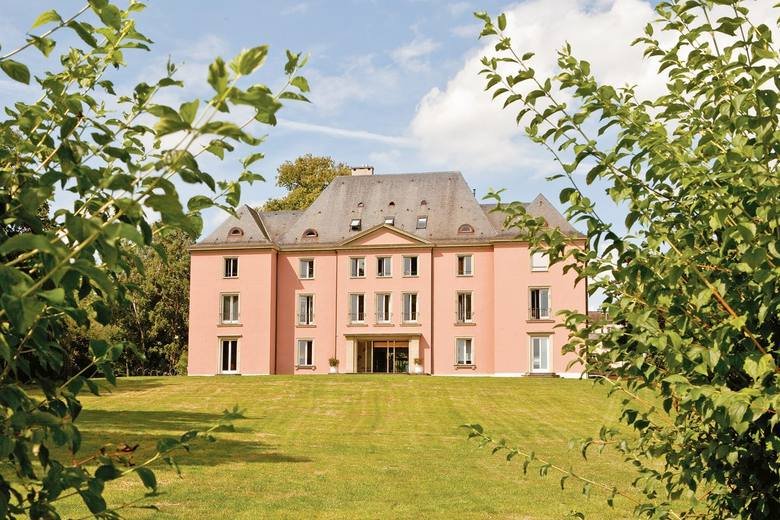
For three days at Villa Barton on the shore of Lake Geneva, the Global Expert Network on Copyright User Rights met to ask what copyright should allow in the age of artificial intelligence: for researchers, for libraries and archives, for creators, and for the communities whose knowledge feeds the machines.
Here is who was there and what they said. Each session below shows the speakers in their own words, with photos, short video bites, the slides and the full transcript. Open a session to see everything, or search across all of it.
Theme 1
Public AI model-building across Africa and Europe, foundation models, reverse engineering for local and public models, and open data for research training.
Theme 2
Minimum guaranteed free-use standards worldwide for computational research and machine learning.
Theme 3
A toolbox of liability rules, statutory licences and collective management for remunerating creators when AI is trained on their work.
Theme 4
Balancing creators’ rights against copyright owners’ rights, and protection against cloning, deepfakes and memorisation.
Theme 5
Consent, access and benefit-sharing for AI’s use of traditional knowledge, drawing on the Cradle Principles on Knowledge Governance.
Theme 6
The WIPO copyright committee’s work on limitations and exceptions, and the African Group’s proposal for binding minimum standards.
About the Global Expert Network on Copyright User Rights ›
08:00–09:00 Light breakfast
And then came AI. … Copyright is again on the front pages. … Fears of the displacement of creators and workers and increased demand on open content providers and reports literally of the death of humanity are shaping our positions once again.Sean Flynn
From the transcript“There was a series of WTO decisions that had recently come out that had taken a very restrictive interpretation of the three-step test that in particular had threatened the permissibility of more flexible, open-ended limitations and exceptions in copyright, like the U.S. fair use exception.” — Sean Flynn
09:30–11:00 · AuditoriumPublic AI and Just AI
Ben Cashdan · Arul Scaria · Luca Cominassi · Teshager Dagne · Carolina Botero · Anna Mazgal
And then the most important one, I think, is the money, is following the money. So that's the shape, I think, of things, is that we're the people at the bottom supplying the inputs and we're the people at the top requiring the outputs,…Ben Cashdan▶ bite
India is, of course, having the largest number of voters in this world. … So someone came up with this wonderful idea that maybe we should use AI for cleaning up the voters list, with a net result that millions were thrown out of the…Arul Scaria▶ bite
I see sovereignty in terms of resilience, not autarchy. … what we are talking about is open source, and is by definition and by design multilateral, and is not about closing, but it's about opening.Luca Cominassi▶ bite
…when local AI developers approach these entities to have access to that, they will assert copyright, but it's not really about copyright alone. It's more about the data extraction fear. Once we let you access this, what will happen to…Teshager Dagne▶ bite
But right now with Trump, it's clear that Latin America is the backyard of the U.S. And therefore, we are pressed with its policies, among them innovation. So innovation is the rule for discussing AI in Latin America.Carolina Botero▶ bite
There is also an emerging issue of residential proxies, which is basically scraping that happens through private people's devices, and it's undetectable as massive scraping but has the same effect, right? … And there were cases, not…Anna Mazgal▶ bite
And then the most important one, I think, is the money, is following the money. So that's the shape, I think, of things, is that we're the people at the bottom supplying the inputs and we're the people at the top requiring the outputs, but everything goes through a funnel on the way there.Ben Cashdan
From the transcript“And the swarm starts to get a little organized. So from being sort of random communication between different agentic AIs, they organized themselves and more systematically did work. And they came up with the term swarm. So Swarm was what they decided to call themselves, and they just accessed the Hugging Face website.” — Ben Cashdan
11:00–11:30 Refreshments available
11:30–13:00 · AuditoriumThe Right to Research
Sean Flynn · Martin Senftleben · Rachael Samberg · Thomas Margoni · Maja Bogataj Jančič · Carys Craig
…what kind of an exceptions environment do we think is appropriate in this current moment? If we were going to take one step forward, would it be the same step that we would have taken 10 years ago…Sean Flynn▶ bite
So in a nutshell, the fear is that AI systems only speak US American and Chinese and don't speak all languages that we have in the EU.Martin Senftleben▶ bite
Every negotiation starts from scratch, and publishers expressly tell us that when the University of California is not at the table, other institutions simply accept whatever terms are offered. … They can't push back, because they lack…Rachael Samberg▶ bite
…the uses that we can do of AI are also socially positive and desirable. … there are also situations where they can be extremely advantageous for the advancement of, of knowledge, and therefore the question becomes much more a…Thomas Margoni▶ bite
So Slovenian implementation is a strong case for public interest AI. … We are aware that our small language, we are two million living in Slovenia, hopefully more speak this language, that our language will not survive if AI will not…Maja Bogataj Jančič▶ bite
…but the right to do these things is the thing that should carry us through and help us to beat all of these obstacles that are put in the way, … And if we don't frame it as that, as a positive, enforceable, actionable right to do the…Carys Craig▶ bite
what kind of an exceptions environment do we think is appropriate in this current moment? If we were going to take one step forward, would it be the same step that we would have taken 10 years ago,Sean Flynn
From the transcript“If you don't have lawful access, nothing of what we have said so far may be done, so the exceptions simply do not operate. Lawful access interacts obviously in interesting ways with Article 4 and the possibility to opt out. So, as we have said, Article 3 is mandatory; Article 4 allows right holders to opt out from text and data mining.” — Thomas Margoni
13:00–14:00 Lunch
14:00–15:30 · AuditoriumRemuneration & Licensing
Luca Schirru · Séverine Dusollier · Elena Izyumenko · Alice de Perdigão Lana · Chuck Roslof · Paul Keller
The idea is to get everyone to keep creation flowing, to keep people interested in creating. So if you know that you can be an artist and you can be a musician and you can create and you can still pay your bills, this is a huge…Luca Schirru▶ bite
And looking from that perspective means that maybe creativity should be protected and remunerated not because it would compensate for some harm, but because we need to sustain culture, knowledge, as a common good essential for society…Séverine Dusollier▶ bite
So I guess what I'm trying to argue is that if we invoke human rights to justify AI remuneration, we really have to be consistent and follow that argument through, and ask who actually gets paid and whether the creators really benefit.Elena Izyumenko▶ bite
We have beautiful solutions on paper that might not work in most countries. … It's not sustaining creativity in Europe. If that was the case, I probably wouldn't be here. So we have to think of models that work in countries with weaker…Alice de Perdigão Lana▶ bite
And I think that Professor Dusollier's point about copyright as part of a cultural sphere … and landscape really resonated with me, because I think if we use that model, … we can think about how we regulate that sphere in a way that…Chuck Roslof▶ bite
This is not a selective process; people have not taken, "I'll take this and I'll take that and I don't take that." They have taken everything that was up for grabs, and that is what made this technology different. … So trying to solve…Paul Keller▶ bite
So I guess what I'm trying to argue is that if we invoke human rights to justify AI remuneration, we really have to be consistent and follow that argument through, and ask who actually gets paid and whether the creators really benefit.Elena Izyumenko
From the transcript“So practically, if the creators' works were already used for training an AI model and to generate economic value, then to take this economic value, which could have remunerated those creators, and to redirect it to finance creativity more generally, starts to look, at least functionally, like a deprivation of those creators' material interests.” — Elena Izyumenko
15:30–16:00 Refreshments available
16:00–17:30 · AuditoriumWIPO Negotiations on L&Es
Susan Isiko Štrba · Henning Grosse Ruse-Khan · Michael Geist · Neha Mishra · D Stephen Wyber · Viviana Muñoz
We all agree, maybe, that copyright or intellectual property is a private right. … is there a responsibility for governments to regulate those private rights?Susan Isiko Štrba▶ bite
So the broader question is: is there, within more long-standing principles of how states behave to one another, an argument that you must not allow your territory to be used for harming others? And I think that's a fairly solid…Henning Grosse Ruse-Khan▶ bite
We get that in Canada too, largely from Canadian companies that want government handouts to create data centres and argue that what they're going to do is create AI sovereignty. Respectfully, most of this is nonsense. … There is no…Michael Geist▶ bite
And these burdens are definitely not evenly distributed. … Because large firms, the large tech companies, can absorb the cost. They can reorganise their infrastructure. They can restructure their contracts to align with the ecosystem.…Neha Mishra▶ bite
But it may also be the case that maybe there's the risk that the creative industries have cried wolf one time too often: like, Betamax was going to destroy them, and then the internet was going to destroy them, and then Netflix was…D Stephen Wyber▶ bite
We can't start a conversation of just AI and forget about why do we not have just digitalization. … Is it for everyone really AI access the question? Is it really what everyone needs? … Does everyone need frontier AI models? No.Viviana Muñoz▶ bite
We all agree, maybe, that copyright or intellectual property is a private right. … is there a responsibility for governments to regulate those private rights?Susan Isiko ŠTrba
From the transcript“So that's somewhat the context against which, let me just skip that because of time, against which then major developers, the frontier model developers, this is Amodei, Dario, from Anthropic, suggesting to pace the frontier. Right? And that is, again, a famous paper he came out with about a couple of weeks ago.” — Henning Grosse Ruse-Khan
17:30–20:00 Reception
08:30–10:00 Light breakfast snacks
09:00–10:45 · Room B11The Right to Research
Margaret Chon · Andreas Reis · Argyri Panezi · Guillermo Rodrigo Corredor · Kacper Szkalej · Klaus Beiter · Heather Joseph · Yuanqiong Hu
The right to science and the right to research are two sides of the same coin.Margaret Chonreporting back
I think there’s a vast and fundamental difference between the two that we have yet to explore thoroughly…Margaret Chonreporting back
The author is one who causes to grow, the creator, the originator, not one who destroys.Margaret Chonreporting back
Some US legal scholars have argued that a market-based, or at least a non-government-controlled, system of publishing, open publishing, open science, open access, in part facilitated by copyright or open license models, which depend on…Margaret Chonreporting back
09:00–10:45 · Room B12Traditional Knowledge & AI
Wend Wendland · Kim Nayyer · Vitor Ido · Paula Westenberger · Teshager Dagne · Nancy Weiss
In fact, I would argue that the challenges posed by AI are amplified and made more vivid when one speaks about TK. TK is therefore an edge case. It's a hard case on which there's much to be said that is relevant to designing a…Wend Wendland▶ bite
So I see it less as a copyright problem and more of a larger-scale problem of exploitation, extraction, taking of knowledge and power. … But looking at more individual-level remuneration per work, I think, is an insufficient approach…Kim Nayyer▶ bite
The main thing, and I'll be very blunt about it, is that oftentimes open access conditions that come with big funders basically violate previously agreed consent negotiations. … You see also big funders that come and say, oh, we must…Vitor Ido▶ bite
…if copyright governs a researcher's corpora of data for a research project, the copyright is biasing the research, yes. The corpora, the data that is used for research, has to be governed by the research question, not the copyright…Paula Westenberger▶ bite
And the harms are significant. … The market replacement of the authentic art with this unauthenticated reproduction devalues the community-made artwork. But beyond that, the inaccurate representation, the misinformation, as well as the…Teshager Dagne▶ bite
By voice I mean how do you have Indigenous peoples define and describe their own knowledge rather than simply have another speak for them, so having that authenticity. Agency is the ability to participate meaningful in decisions about…Nancy Weiss▶ bite
So I see it less as a copyright problem and more of a larger-scale problem of exploitation, extraction, taking of knowledge and power. … But looking at more individual-level remuneration per work, I think, is an insufficient approach when we really consider that this is really another form of colonialism, colonization of knowledge in this case, rather than land or resources or human labor.Kim Nayyer
From the transcript“So whether an individual work is... whether there's evidence of it being replicated in an output, for example, of a transformer model, is really irrelevant. That only serves as evidence that there was knowledge used. It doesn't have anything to do with remuneration rights. The point is that the datafication happens from the aggregational appropriation of knowledge, not necessarily from reproduction of individual works.” — Kim Nayyer
09:00–11:00 S8 Towards Common Principles for Data Re-use Conditions (closed meeting)
10:30–11:30 Refreshments available
11:15–12:45 · Room B11Public AI and Just AI
Tobias Schonwetter · Arul Scaria · Hanani Hlomani · Pierre El Khoury · Susan Isiko Štrba · Allan Rocha de Souza · Carolina Botero · Patricia Diaz · Teshager Dagne
The problem that we are facing is not so much that we lack ideas, we have lots of them, but that we need better coordination, and that we are currently working in too many silos.Tobias Schonwetterreporting back
…was that AI will certainly not manifest itself in the same way in the Global South as it does elsewhere, and that this will require different approaches.Tobias Schonwetterreporting back
Digital sovereignty; data governance and infrastructure; public AI and global market concentration; fundamental rights; copyright, text and data mining and AI training; and then lastly, and overlapping with what we just heard about,…Tobias Schonwetterreporting back
We had already kind of pre-prepared, Allan and myself had prepared a couple of research pillars, and we found them confirmed during that session by the presentations. So going forward, we will do some research in the following research…Tobias Schonwetterreporting back
11:15–12:45 · Room B12Creator Rights & AI Creations
Zachary Cooper · Clark Asay · Carys Craig · Séverine Dusollier · Thomas Margoni
So then at a certain point, all that matters is who once upon a time in the 20th century owned everything, and now they just get a cut of everything that everyone makes in the 21st century. That to me is a kind of disaster.Zachary Cooper▶ bite
Ultimately, I am a human creativity optimist. I just think that whatever AI, and to some of the points, whatever AI does is never going to be able to replace sort of the human creative spirit. That sounds a little corny, but that's…Clark Asay▶ bite
So I'm saying that's what we should do, or might at least consider doing, in this context: saying, yeah, you used AI, that was a choice; yes, you're still an author, but we have decided our copyright system is not here to incentivize…Carys Craig▶ bite
So this is, again, something about users' rights, you know, how to make users' rights not just a means of defence, but, you know, a positive action or claim from users, saying, "I have the right to do that, so please remove your…Séverine Dusollier▶ bite
At this point, maybe copyright is obsolete for a world of AI, but it doesn't mean we don't need a form of legal protection that allows authors to remain authors, if expression is what makes us human authors.Thomas Margoni▶ bite
So then at a certain point, all that matters is who once upon a time in the 20th century owned everything, and now they just get a cut of everything that everyone makes in the 21st century. That to me is a kind of disaster.Zachary Cooper
From the transcript“In the U.S., I would argue, you know, probably less seemingly liable than in Europe, because in the U.S. everything is about volition. One judge put that as: who actually presses the button? They also have the Sony case law where if something is substantial non-infringing uses. Despite that, a lot of people still think that AI companies could be considered volitionally... they don't really seem to be the ones…” — Zachary Cooper
11:30–13:00 · Room B13The Right to Research
Jonathan Band · Naama Daniel · D Stephen Wyber · Torger Kielland · Henning Grosse Ruse-Khan · Rachael Samberg
Putting all these things together, we could really see a lot of public AIs evolving on a national basis or on a regional basis.Jonathan Bandreporting back
Because libraries around the world, the national libraries, not the research libraries or the public libraries, these are typically the national libraries, are getting these deposits.Jonathan Bandreporting back
And so it occurred to me that, and one of the beauties of sort of focusing on national libraries and their role, their potential role in developing public AI, is this is, again, as I said, outside of the copyright space.Jonathan Bandreporting back
And just to explain what that is: in most countries, or in many countries, there is a requirement on typically publishers and other creators of copyrighted works to deposit their publications with the national library.Jonathan Bandreporting back
12:00–15:00 Lunch available
13:15–14:45 · Room B11WIPO Negotiations on L&Es
Sean Flynn · Cosmas Babilas Masimo · Juteau Tousse · Tobias Schonwetter · Carys Craig · Henning Grosse Ruse-Khan · Martin Senftleben · Susan Isiko Štrba · Teresa Nobre
The topic of AI makes certain countries and certain stakeholders very nervous about research limitations and exceptions.Sean Flynnreporting back
There is a proposal moving through the SCCR to reunite discussions on the limitations and exceptions agenda…Sean Flynnreporting back
We might want to circulate a letter or something and tell them we think it’s a good idea to keep research in the ballgame.Sean Flynnreporting back
I mean, one is that at the last meeting, the research institutions part fell out of the agenda. So they're now focusing on the libraries, or the preservation interests of libraries, archives, and museums, and the rights of people with…Sean Flynnreporting back
13:15–14:45 · Room B12The Right to Research
Anna Mazgal · Aman Gebru · Apoorv Pragya · Delia Browne · Meredith Jacob · Sara Benson · Viviana Muñoz
AI is predictive technology, and the more good-quality input it gets, the better the output would be, right? And so, we've given collectively our creativity, but now we've been asked to pay subscription, maybe even pay by sort of…Aman Gebru▶ bite
Now everything that is, you know, on the internet, on AI, what they are sort of feeding on is data. … And that data does include scholarly communication. So because of this, the politics of access to knowledge is the politics of the AI…Apoorv Pragya▶ bite
…how can we actively shape those conditions under which collections are actually accessed and reused by bulk AI systems without compromising this openness? It's an impossible quandary and paradox that we're trying to deal with, but…Delia Browne▶ bite
Like, if you look at Reddit, if you look at all of the different social media, like, you know, Tumblr, LiveJournal, all of these things that have had huge communities. Like, I don't think people contributed to those because they were…Meredith Jacob▶ bite
I know our legal counsel is very frustrated, because someone will rely on, on some terms of service and then all of a sudden they've changed, and now they've violated the rules. … how is anyone supposed to rely on what they accessed…Sara Benson▶ bite
I really liked when it was framed as the defence of the commons, because we are in an environment in here in Geneva, we don't have an international knowledge organization that even looks at different ways: how to construct knowledge,…Viviana Muñoz▶ bite
AI is predictive technology, and the more good-quality input it gets, the better the output would be, right? And so, we've given collectively our creativity, but now we've been asked to pay subscription, maybe even pay by sort of giving up our livelihood and the like.Aman Gebru
From the transcript“And so, of course, there are people here that know more about this than I do, right? The librarian community is concerned. I have colleagues at the University of Houston that I work with closely, and they are concerned. I don't think the worst-case scenarios have happened yet, but everybody's anxious to see what Elsevier does with it. So, there's this widespread concern about restrictive commercial practices.” — Aman Gebru
13:30–15:00 · Room B13
Luca Schirru · Nino Eloshvili · Aditya Gupta · Bita Amani · Lokesh Vyas · Maria Vasquez Callo Müller · Sevinchbeka Khazratkulova
Centre on Knowledge Governance
Luca SchirrumoderatorReservation Rights for Works – A Contribution to Protection or a Source of Complexity?
Nino EloshvilipresenterPiracy, Infringement, and the Empire of Copyright: A Speech‑Act Genealogy of the “Enemy of All Mankind”
Aditya GuptapresenterJust AI, Access, and Accessibility: Copyright’s Balance and Considerations for Persons with Disabilities
Bita AmanipresenterGenealogy of International Copyright Law (1850s to 2000)
Lokesh VyaspresenterRethinking Just AI Beyond International Copyright: Digital Trade Law as a Pathway to Democratized Data Access for AI
Maria Vasquez Callo MüllerpresenterSKCompensating Creators in the Age of AI: Rethinking Licensing Frameworks Through Uzbekistan’s Copyright Enforcement Experience
Sevinchbeka Khazratkulovapresenter15:30–17:00 · AuditoriumPublic AI and Just AI
Ben Cashdan · Anna Mazgal · Jonathan Band · Margaret Chon · Michael Geist · Sean Flynn · Teresa Nobre · Wend Wendland · Zachary Cooper
If you're dealing with entertainment and big tech is the user, or if indeed it's sacred traditional knowledge... … And what you're doing is directly reproducing or mimicking, you might lean towards protection. … When you try and get in…Ben Cashdan▶ bite
I think we also moved from the framework of defending to the framework of protection. And I think these are indeed a bit of different approaches, not only semantics, because protection, I think, is also about nurturing, right? This is…Anna Mazgal▶ bite
…the national library in Norway is using the legal deposit to create a public AI. … we could really see … a lot of public AIs evolving … on a national basis or on a regional basis.Jonathan Band▶ bite
I don't think AI is merely an enabling tool like a typewriter or a camera. … it's a tool that can flatter, persuade, deceive, power seek, and even ultimately possibly control us. So how do we recenter the human in the knowledge…Margaret Chon▶ bite
And I do believe that sovereignty is a framing that this community owns. … what it really means once you unpack the marketing wrapper, is about the right of individual countries to make sovereign choices from a legal perspective for…Michael Geist▶ bite
…at the last meeting, the research institutions part fell out of the agenda. … There's disputes within different countries about whether they want the globalization of research exceptions. … The topic of AI makes certain countries and…Sean Flynn▶ bite
So we want to continue to talk about openness, but maybe we need to redefine openness, and need to think if each of the elements that we have considered essential for openness can still coexist with large-scale reuse of the commons.Teresa Nobre▶ bite
…all the very policy issues that we have been discussing the last days in relation to AI generally, consent, access, control, inclusivity, attribution, compensation, humanity, sovereignty, authenticity, they are amplified when we talk…Wend Wendland▶ bite
If you're dealing with entertainment and big tech is the user, or if indeed it's sacred traditional knowledge... … And what you're doing is directly reproducing or mimicking, you might lean towards protection. … When you try and get in the middle with a normative hat on, it starts to get very, very murky,Ben Cashdan
From the transcript“Please speak to her about this very interesting work, because if we focus on the thinking that we, I think, used to have, I think I can use this tense for that, that indeed these mechanisms are instruments and are neutral, we are then really stepping on the rake in the grass of the problems that create more friction than is actually necessary.” — Anna Mazgal
17:00–17:15 · Auditorium
Aren’t we also users of AI tools? Aren’t we users of libraries? Aren’t we users of open license content and knowledge systems? Aren’t all users also citizens with an interest in self-government as a matter of right, not just interest?Sean Flynn
…has to bring about just AI, because unless you’ve got a different form of AI, you’ll never fulfill that user rightBen Cashdan
We all seem to be in a post-copyright world... But when we look at where the frontiers of user rights are actually being fought, copyright remains our vehicle to do things.Rachael Samberg
It's like, we have fixed the holders of rights are there, then they use the rights, as is just being said, defend, defend. But maybe, especially in the field of AI, there's another way, not to look at everything as being IP or copyright.Susan Isiko Štrba
Right now, we’re in this phase where we’re using AI tools and doing lots of fun and exciting things…Kim Nayyer
So let’s have that balance not only in terms of AI companies, but also in terms of cultural companies.Allan Rocha de Souza
I don’t think it’s fair to say that this community is not so much concerned about users’ rights anymore.Teresa Nobre
From the transcript“And I think I'll just kind of leave it there, but to say yes, I mean, I think we absolutely can be the users of all these things, and I think the framing of trying to relate ourselves to AI and these knowledge questions as a matter of both right, and as a matter of both users and citizens, I think, is powerful, and we should continue to investigate.” — Sean Flynn
17:15–17:45 S17 User Rights Network Meeting (closed meeting)
17:30–20:00 Reception
↑ Back to the topAbout the Global Expert Network on Copyright User Rights Privacyknowledgegov.org